

I. Introduction: The Diol That Defines Weatherability in Industrial Coatings
Neopentyl glycol (NPG, CAS 126-30-7) is one of those raw materials whose performance contribution is often underestimated until a coating fails prematurely. As a branched aliphatic diol with a quaternary carbon center, 2,2-Dimethyl-1,3-propanediol imparts hydrolytic stability, UV resistance, and thermal endurance that linear diols simply cannot match. This is why it remains the default choice for saturated polyester resins in coil coatings, powder coatings, and architectural finishes—as well as for specialty plasticizers, synthetic ester lubricants, and UV-curable systems.
II. Why NPG Outperforms Linear Diols: The Chemistry Behind Durability
1. The Quaternary Carbon Advantage
The defining feature of NPG is its 2,2-dimethylpropane backbone. The two methyl groups shield the adjacent carbon atoms, eliminating vulnerable β-hydrogens that typically initiate hydrolysis and oxidation in ester linkages. The practical result: polyester resins built with NPG retain gloss, color, and mechanical integrity far longer when exposed to moisture, alkaline cleaners, and outdoor weathering.

2. Crystallinity Management—The Formulator’s Real Challenge
NPG’s symmetry gives it a relatively high melting point and a strong tendency to crystallize. This characteristic is a double-edged sword:
Benefit: It contributes to the hardness, Tg, and chemical resistance of the final resin.
Challenge: Slow or incomplete crystallization during resin synthesis can cause post-crystallization haze, surface blooming, or handling issues in powder coatings.
Successful formulations address this through controlled NPG/isophthalic acid ratios, strategic comonomer selection (such as adipic acid, hexahydrophthalic anhydride, or cyclohexane dimethanol), and carefully managed cooling profiles. Buyers sourcing NPG should confirm that their supplier’s grade offers consistent crystallization behavior batch-to-batch—a factor that affects production throughput as much as final film performance.
3. Reactivity Profile in Esterification
NPG reacts readily with aromatic and aliphatic dicarboxylic acids under standard polyesterification conditions. Its primary hydroxyl groups provide predictable kinetics, enabling shorter reaction cycles and lower residual acid values compared with hindered or secondary diols. For manufacturers running continuous or semi-continuous polyester lines, this translates into tighter control over molecular weight distribution and viscosity.
III. Application Focus 1: NPG in Saturated Polyester Resins for Coil and Powder Coatings
Coil and Pre-Painted Metal
Saturated polyester resins derived from NPG and isophthalic acid, crosslinked with melamine-formaldehyde or blocked isocyanates, dominate the coil coating segment. Key performance outcomes include:
T-bend flexibility without sacrificing hardness – critical for forming and deep-drawing operations in building panels and appliance skins.
Alkali and detergent resistance – essential for appliances and food-contact packaging lines.
Gloss retention after QUV and Florida exposure – a direct consequence of NPG’s hydrolytically stable ester linkages.
Powder Coatings
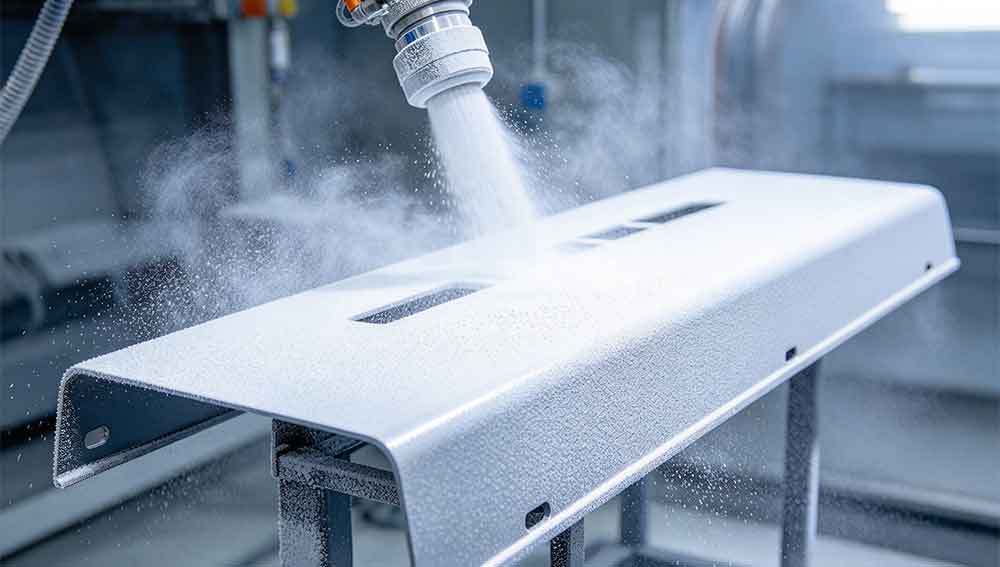
In TGIC or HAA (β-hydroxyalkylamide) cured powder systems, NPG-based polyesters deliver the balance of outdoor durability and flow characteristics required for architectural aluminum extrusions and automotive wheels. Low residual monomer content and narrow acid value distribution are the two specification parameters that most directly influence cure response and orange-peel control.

Architectural and Industrial Liquid Coatings
For solvent-borne and high-solids alkyds, partial replacement of conventional glycols with NPG significantly improves early water resistance and reduces saponification risk in humid environments—an increasingly important attribute as coating systems shift toward thinner films and faster recoat schedules.
IV. Application Focus 2: NPG Derivatives—Plasticizers, Lubricant Esters, and Reactive Diluents
Beyond resins, a growing share of NPG volume flows into derivative chemistry where its steric hindrance becomes a functional asset.
Hydroxypivalate Plasticizers (e.g., NPG Hydroxypivalate)
These mono-ester derivatives combine excellent plasticizing efficiency with very low volatility and superior migration resistance. They are widely specified in PVC compounds, cable insulation, and synthetic leather where long-term flexibility retention under heat aging is non-negotiable. Their low-temperature performance also makes them attractive for flexible films used in cold climates.
Dibasic Esters and Diesters (DBE-Type Solvents)
NPG diesters serve as high-boiling, slow-evaporating coalescing solvents and coupling agents in coil and industrial coatings. Their solvency power, low odor, and favorable toxicological profile position them as alternatives to traditional glycol ethers in VOC-constrained markets.
Synthetic Ester Lubricants and Compressor Oils
Esterification of NPG with C5–C9 fatty acids yields branched synthetic esters with outstanding thermal-oxidative stability and low pour points. These are used in refrigeration compressor oils, metalworking fluids, and hydraulic fluids where hydrolytic stability determines service life. The same steric shielding that protects coating films protects these lubricants from acid-induced breakdown.
UV-Curable and Polyurethane Systems
As a chain extender and diol component, NPG appears in UV-curable oligomers and polyester polyols for rigid and flexible foams, elastomers, and adhesives. Its contribution here is primarily mechanical: improved tensile strength, abrasion resistance, and reduced water uptake.

V. Specification Checklist: What to Verify Before Placing an NPG Order
For buyers comparing grades or qualifying a new source, these are the parameters that matter most in real-world processing:
| Parameter | Why It Matters |
| Purity (GC area %) | Directly affects resin color, acid value, and batch consistency |
| Moisture content | Excess water slows esterification and increases catalyst demand |
| Color (APHA) in melt | Predicts final resin yellowness index, especially in light-colored powders |
| Crystallization behavior / freezing point | Impacts winter logistics, drum discharge, and melt-tank design |
| Residual aldehyde / trace impurities | Can interfere with catalyst systems and cause odor issues in derivatives |
| Physical form (flakes, prills, powder, molten) | Determines dosing method, dust generation, and melting time |
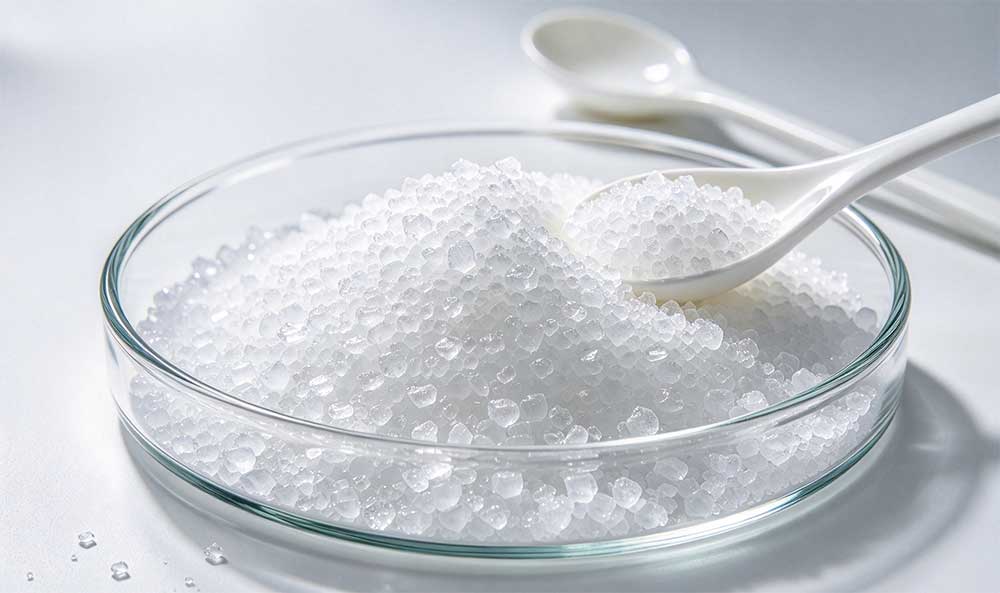
Flakes vs. Prills vs. Powder: This is one of the most-searched questions in the NPG category. Flakes offer good bulk density and moderate dust; prills/granules flow best in automated feeding systems; fine powders dissolve fastest but require dust extraction. The right choice depends on your melt tank configuration and whether the material is hand-charged or pneumatically conveyed. Always request the particle size distribution and bulk density data—not just the purity certificate.
VI. Handling, Logistics, and Regulatory Position
Physical form & melting: Solid at ambient temperature; typically handled molten (~60–80°C) in bulk or in 25 kg bags. Avoid repeated heating cycles, which can promote discoloration.
Storage: Keep containers sealed in a dry, well-ventilated area. NPG is hygroscopic; moisture pickup is the most common cause of off-spec resin batches.
Compatibility: Stable under normal conditions. Keep away from strong oxidizers and acids.
Health & safety: Causes eye irritation; handle with gloves and eye protection. Refer to the current SDS for hazard classification and first-aid measures.
Regulatory: Listed on major chemical inventories including TSCA; REACH-registered for EU supply. NPG is not classified as a substance of very high concern, and its low volatility supports its use in low-VOC formulations. Confirm destination-market status (including China new chemical inventory requirements for derivatives) before shipment.
VII. Market Drivers: Where Is NPG Demand Growing?
Several structural trends are expanding NPG consumption beyond its traditional coil-coating base:
Powder coating adoption in emerging markets – As architectural aluminum and appliance finishing shift from liquid to powder in Southeast Asia, the Middle East, and Latin America, NPG-based polyester resin demand follows.
Durability-as-a-specification – Longer warranty periods on building panels and pre-painted metal force resin makers toward higher NPG content rather than cheaper linear glycols.
VOC and solvent regulation – Derivatives such as NPG diesters and hydroxypivalates gain share as formulators replace glycol ethers and phthalate plasticizers.
Refrigeration and heat-pump equipment growth – Synthetic ester compressor oils benefit from both HVAC expansion and the transition to lower-GWP refrigerants requiring compatible lubricants.
Supply-chain diversification – Buyers increasingly seek dual-source strategies across Asia, Europe, and North America, making consistent grade equivalency and documentation quality decisive purchasing factors.
VIII. Frequently Asked Questions (FAQ)
Q: Can NPG fully replace propylene glycol in polyester resins?
A: Not on a cost basis, and not without adjusting the comonomer package. NPG is typically used as a partial or full replacement in premium grades where weatherability is the selling point. In economy alkyds, a blend approach is more common.
Q: Does NPG affect the curing speed of powder coatings?
A: Indirectly. NPG influences polyester Tg, acid value, and chain architecture—all of which affect cure window and flow. Consistency in NPG quality matters more than minor differences between suppliers.
Q: Is NPG suitable for food-contact or toy applications?
A: NPG itself is widely used in resins for packaging and consumer goods, but compliance depends on the finished polymer and regional regulations (FDA, EU 10/2011, EN71). Always verify the final formulation’s compliance status rather than assuming based on the monomer.
Q: What is the typical shelf life?
A: When stored dry and sealed, NPG remains stable for extended periods. The limiting factor is usually moisture absorption and physical caking, not chemical degradation.
IX. Conclusion: Choosing NPG on Performance, Not Just Price Per Kilo
Neopentyl glycol NPG is one of the few commodity diols where the molecule’s architecture delivers a measurable return on investment—in warranty length, in rework reduction, and in the ability to meet increasingly demanding durability specifications. Whether you are producing coil-coating polyesters, outdoor-grade powder resins, low-migration plasticizers, or synthetic ester lubricants, the critical variables are consistent purity, predictable crystallization behavior, and reliable documentation. Those are the attributes that determine whether an NPG grade performs in your process or merely passes the COA.
 for Polyester Resins & Plasticizers)