

In the rapidly evolving landscape of modern manufacturing, the demand for materials that can withstand extreme conditions without compromising performance is at an all-time high. Enter PMDA, or Pyromellitic Dianhydride. Known in the chemical industry as the fundamental building block of polyimides, PMDA is far more than a simple chemical intermediate; it is the critical enabler of innovation across electronics, automotive, industrial coatings, and energy sectors.
I. The Ultimate Precursor for Polyimides
Through its reaction with diamine monomers, PMDA forms highly cross-linked, three-dimensional polymer networks. This unique molecular structure imparts extraordinary properties to the resulting polyimides. Derived from PMDA, these materials boast exceptional thermal stability, withstanding continuous operating temperatures ranging from -269°C to over 400°C. Furthermore, they exhibit outstanding mechanical strength, superior chemical resistance, and excellent dielectric properties, making them irreplaceable in high-tech industrial applications.
II. Driving the Electronics and Automotive Revolutions
The most prominent downstream product of PMDA is polyimide film. As the foundational insulating substrate for Flexible Printed Circuits (FPC), PMDA-based films are the unsung heroes behind the “light, thin, short, and small” design of modern smartphones, laptops, and wearable devices. The booming demand for foldable screens, 5G infrastructure, and OLED displays continues to drive unprecedented growth in this sector.
Beyond consumer electronics, PMDA’s derivatives are indispensable in the automotive industry. The shift toward New Energy Vehicles (NEVs) has created a massive new growth driver. PMDA-based materials are extensively used in motor insulation systems, battery pack protection, and high-temperature wiring harnesses, ensuring safety and efficiency under extreme operational stress.
III. Versatility Beyond Polyimides
While polyimides represent its crown jewel, PMDA is a remarkably versatile chemical. Its high reactivity and multifunctional structure allow it to serve as a highly effective curing agent for epoxy resins, significantly enhancing the thermal and mechanical performance of adhesives, coatings, and electrical insulation materials. In the plastics industry, PMDA acts as a crucial chain extender for polymers like PET, improving their thermal stability for food packaging. Additionally, it serves as a crosslinking agent for polyester resins, a precursor for vibrant phthalocyanine blue dyes, and even as a foundational material for advanced cathode active materials in next-generation lithium and sodium-ion batteries.
IV. A Market Defined by High Barriers and Innovation
The global PMDA market is characterized by its high technological and capital barriers, resulting in a highly concentrated competitive landscape. Industrial production primarily relies on the catalytic vapor-phase oxidation of durene, a process where catalyst efficiency and purification techniques remain closely guarded proprietary secrets. Emerging manufacturers are making significant breakthroughs in production capacity and quality, accelerating the localization of this critical material. Driven by the global push for carbon neutrality, semiconductor industry upgrades, and the relentless miniaturization of electronic devices, the PMDA market is projected to experience robust growth in the coming decade.
V. Conclusion
PMDA (CAS 89-32-7) is much more than a chemical compound; it is a strategic material that defines the performance limits of modern industrial engineering. From the flexible screens in our pockets to the batteries powering the green energy transition, and the high-performance coatings protecting industrial equipment, PMDA’s unique molecular architecture continues to push the boundaries of what is possible. As industries worldwide demand lighter, stronger, and more heat-resistant materials, PMDA will undoubtedly remain at the forefront of advanced material science, powering the next generation of technological breakthroughs.
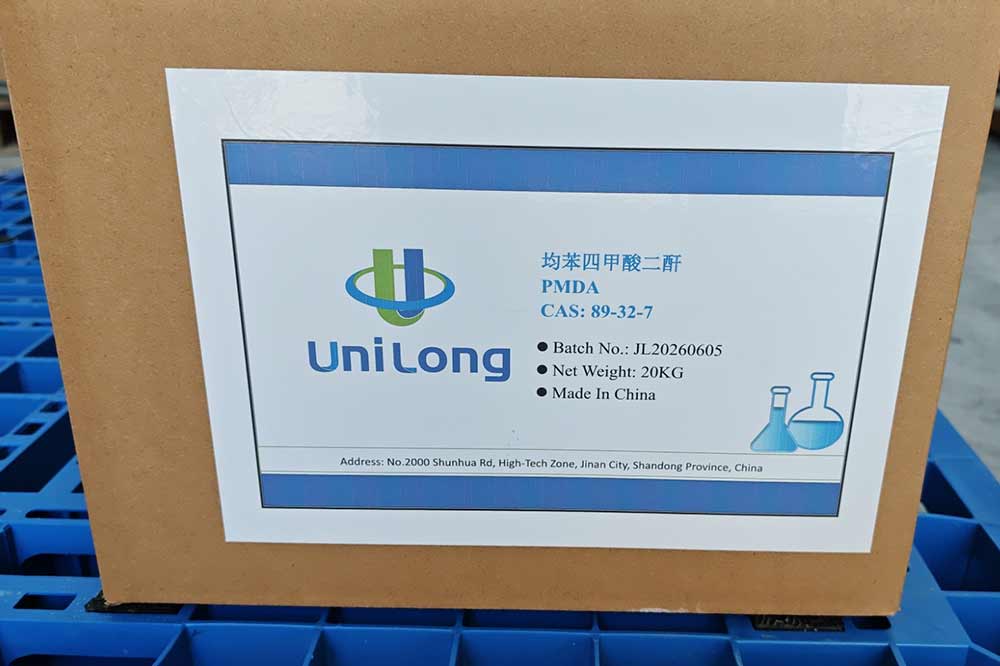
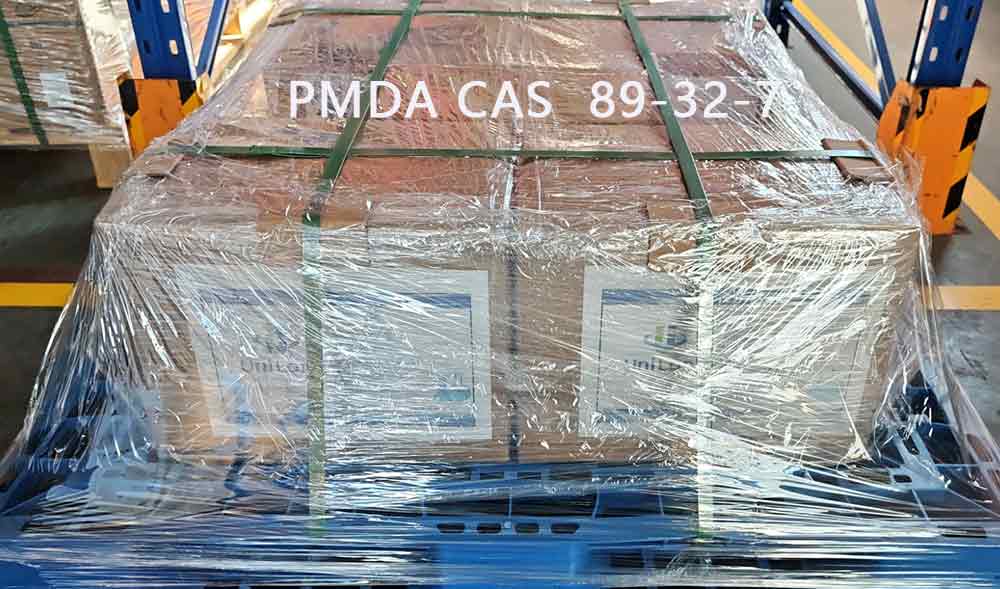
Unilong is a professional manufacturer of pyromellitic dianhydride (PMDA, CAS 89-32-7). . With purity ≥99.5% / 99.8%. Adopting advanced purification and crystallization process, our PMDA has low free acid and consistent quality batch by batch, which guarantees stable polymerization performance for polyimide production. The factory has sufficient production capacity, which enables us to handle sample submissions for testing and provide stable bulk supply. Each batch comes with a COA (Certificate of Analysis) quality inspection report, and we can also offer corresponding technical support
