

Sodium allyl sulfonate (abbreviated as SAS, CAS 2495-39-8) is an anionic monomer with an active double bond and a strong hydrophilic sulfonic acid group. Its molecular structure combines the advantages of reactivity and water solubility. Sodium allyl sulfonat has demonstrated irreplaceable functional value in fields such as polymer synthesis, water treatment, and textile printing and dyeing, and has become one of the key functional raw materials in the chemical industry chain.
I. Polymer Synthesis Field: “Functional Additives” for Enhancing Polymer Performance
In the preparation of polymer materials, the core role of sodium allyl sulfonate is to act as a copolymer monomer, participating in the polymerization reaction through double bonds and introducing sulfonic acid groups into the polymer molecular chain, thereby optimizing the hydrophilicity, stability and mechanical properties of the material. sodium allylsulfonate is widely used in the production of synthetic resins, rubber and polymer additives.
In the production of high-molecular flocculants for water treatment, sodium allylsulfonate is often copolymerized with monomers such as acrylamide and acrylic acid to prepare anionic polyacrylamide-based flocculants. The introduced sulfonic acid groups can enhance the solubility and dispersion of the flocculant in water, improve the adsorption and sedimentation efficiency of oily wastewater and heavy metal wastewater, and at the same time increase the salt resistance and thermal stability of the flocculant, making it highly effective in the treatment of high-salinity industrial wastewater (such as oilfield produced water and chemical wastewater). Currently, the usage in this field accounts for more than 35% of the total consumption.

In the synthetic rubber industry, sodium prop-2-ene-1-sulfonate, as a modified monomer for styrene-butadiene rubber and nitrile rubber, can improve the vulcanization performance and aging resistance of rubber. After addition, the tensile strength of rubber products increases by 10% to 15%, and it can also reduce the swelling of rubber in high-temperature environments. sodium prop-2-ene-1-sulfonate is particularly suitable for products with high weather resistance requirements such as automotive tires and seals. In addition, sodium allyl sulfonate can act as a crosslinking agent in water-soluble polymer coatings, enhancing the adhesion and water resistance of the coatings and preventing them from peeling off easily in a humid environment.
II. Water Treatment Field: The “Stabilizer” of Circulating Water Systems
In addition to being used as a raw material for flocculants, sodium allyl sulfonate can also be directly employed as a scale inhibitor and dispersant as well as a corrosion inhibitor in circulating water treatment. With its chelating ability for calcium and magnesium ions and its adsorption and protective effect on metal surfaces, it can solve the problems of scaling and corrosion in industrial circulating water systems.
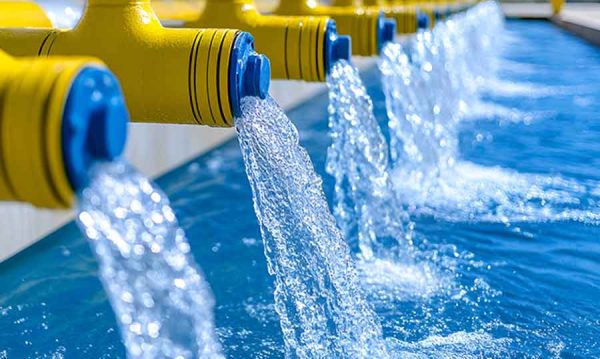
In industrial cooling circulating water systems, sodium allyl sulfonate can form stable chelates with scale precursor substances such as calcium carbonate and calcium sulfate in water, preventing their crystallization and deposition on the tube walls of heat exchangers. Experimental data show that adding sodium allyl sulfonate at a concentration of 5-10mg/L It can reduce the formation of scale by more than 60%, while lowering the thermal resistance of the heat exchanger and enhancing the heat exchange efficiency. In addition, the sulfonic acid groups in its molecules can adsorb onto the surface of metal pipes, forming a dense protective film that inhibits the electrochemical corrosion of metals, reducing the corrosion rate of carbon steel pipes to below 0.05mm/a, which is far lower than the national industrial circulating water corrosion control standard (≤0.125mm/a).
In boiler water treatment, sodium allylsulfonate, when used in combination with organic phosphonates, zinc salts, etc., can form highly efficient corrosion and scale inhibitors. sodium allylsulfonate is suitable for stabilizing water quality in medium and low-pressure boilers, preventing local overheating damage caused by scaling on the inner walls of boilers, and extending the service life of equipment.
III. Textile Printing and Dyeing Field: “Synergistic Auxiliaries” for Fabric Dyeing and Finishing
In the textile industry, sodium allyl sulfonate, with its hydrophilic and dispersing properties, has become an important component of printing and dyeing auxiliaries, mainly used for dye dispersion, anti-wrinkle finishing of fabrics, and modification of printing pastes.
In the dye dispersion process, sodium prop-2-ene-1-sulfonate can be used as a dispersant to improve the suspension stability of disperse dyes in water, prevent dye particle agglomeration, ensure uniform adhesion of dyes to the fabric surface during dyeing, and reduce problems such as color streaking and color difference. It has particularly excellent compatibility with difficult-to-disperse VAT dyes and reactive dyes, and can increase the dye uptake rate by 8% to 12%.
In the anti-wrinkle finishing of fabrics, sodium prop-2-ene-1-sulfonate is compounded with formaldehyde capture agents and crosslinking agents for the anti-wrinkle treatment of natural fiber fabrics such as cotton and linen. By undergoing cross-linking reactions with the hydroxyl groups in the fiber molecules, the elastic recovery of the fabric is enhanced. The wrinkle recovery Angle of the treated fabric increases by more than 25%, and the formaldehyde emission of the finishing agent can be reduced, meeting the standards of ecological textiles. In addition, in the printing process, sodium allylsulfonate can modify printing pastes such as starch and sodium alginate, enhance the rheology and water retention of the pastes, prevent the seepage of printed patterns, and ensure the clarity and integrity of the patterns.

IV. Other Emerging Application Fields: “Potential Players” in Functional Expansion
With the development of chemical technology, the application scenarios of sodium allyl sulfonate are still constantly expanding. In the field of electronic electroplating, it can be used as an additive in the electroplating solution to improve the uniformity and gloss of the coating. Especially in the galvanizing and nickel plating processes, it can reduce pinholes and burrs in the coating and enhance the corrosion resistance of the coating. In the field of oilfield exploitation, the high-molecular polymer prepared by copolymerizing sodium allylsulfonate with acrylamide and others can be used as a fluid loss reducer for drilling fluids, reducing the fluid loss of drilling fluids and protecting oil layers from contamination. In the field of daily chemicals, sodium allylsulfonate CAS 2495-39-8, which is used in small amounts in products such as shampoos and body washes, can serve as a conditioner to improve the foaming property and skin compatibility of the products.
As a multifunctional chemical raw material, sodium allylsulfonate plays a key role in multiple industrial fields due to its unique chemical structure and properties. In the future, with the growth in demand for green chemical engineering and high-performance materials, their application in fields such as environmentally friendly polymer materials and ecological printing and dyeing auxiliaries will be further deepened, and the market potential will continue to be released.
