

CHPTAC, short for 3-Chloro-2-hydroxypropyltrimethyl ammonium chloride, is one of the most widely used cationic etherifying agents in modern industry.
With CAS Number 3327-22-8, this quaternary ammonium salt plays a key role in transforming natural polymers such as starch, cellulose, and guar gum into valuable cationic derivatives. These modified materials exhibit enhanced adsorption, reactivity, and compatibility with negatively charged systems — properties that are crucial across the paper, textile, water treatment, and personal care industries.
I. What Is CHPTAC (CAS 3327-22-8)?
CHPTAC stands for 3-Chloro-2-hydroxypropyltrimethyl ammonium chloride. It is a colorless to light yellow transparent liquid with strong reactivity toward hydroxyl-containing materials such as starch, cellulose, and guar gum.
Chemically, it acts as a cationic etherifying agent, introducing positively charged quaternary ammonium groups into polymer chains. This process transforms nonionic or anionic materials into cationic derivatives with new functional properties.
Chemical Formula: C6H15Cl2NO
CAS Number: 3327-22-8
Other Names: CHPTAC Chemical, CHPTMAC, Quaternary Ammonium Salt Etherifying Agent
II. The Chemistry Behind CHPTAC’s Cationization Process
When CHPTAC is added to a hydroxyl-containing substrate such as starch or cellulose under alkaline conditions, it undergoes an intramolecular cyclization to form epoxypropyl trimethyl ammonium chloride (EPTAC).
This intermediate reacts with hydroxyl (-OH) groups on the polymer backbone through etherification, resulting in the introduction of quaternary ammonium groups.
The newly attached quaternary ammonium groups provide permanent positive charges that improve the polymer’s affinity toward anionic particles, dyes, and fibers.
This transformation enhances the overall charge density, hydrophilicity, and interaction capability of the modified material.
III. CHPTAC in Cationic Starch Modification
1. Role in Paper Manufacturing
The most important application of CHPTAC (CAS 3327-22-8) is in the production of cationic starch, a critical wet-end additive in the pulp and paper industry.
By introducing cationic sites onto starch molecules, CHPTAC significantly enhances their interaction with negatively charged cellulose fibers, fillers, and fines.

Key Benefits of Cationic Starch:
Improved Retention: Enhances the retention of fillers, fines, and pigments on paper sheets.
Higher Paper Strength: Increases both dry and wet strength, improving overall paper quality.
Better Drainage and Formation: Reduces drainage time and improves sheet formation during papermaking.
Reduced Cationic Demand: Lowers the need for synthetic retention aids and wet-strength resins.
Eco-Friendly Advantage: Derived from renewable starch sources and processed under mild conditions.
2. Degree of Substitution (DS) Control
By adjusting the molar ratio of CHPTAC to starch and reaction time, manufacturers can precisely control the degree of substitution (DS), which directly affects charge density and performance.
Higher DS values lead to stronger electrostatic attraction and improved efficiency, particularly in fine paper and coated grades.
IV. CHPTAC in Cationic Cellulose Modification
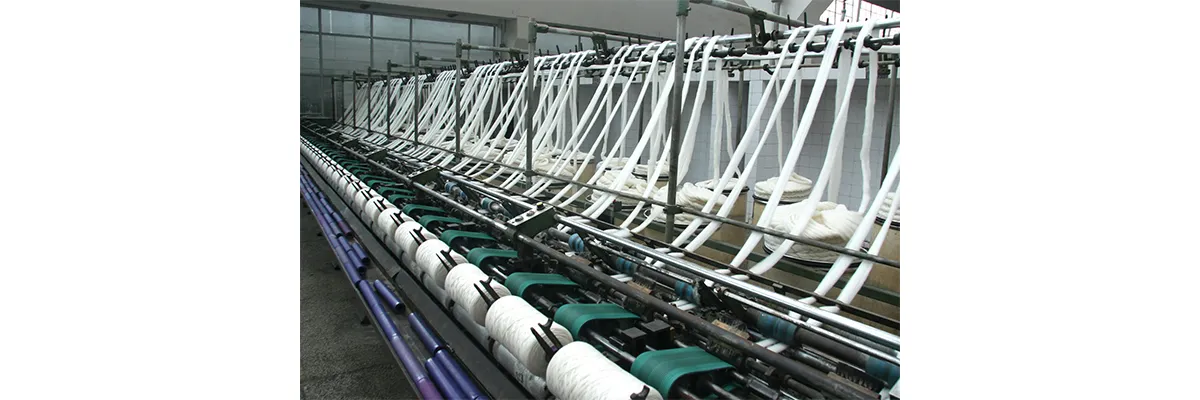
1. For Textile Industry
CHPTAC chemical is also used to produce cationic cellulose derivatives, commonly known as quaternized cellulose ethers.
These materials are used in textile dyeing, finishing, and fiber treatment due to their excellent dyeability and softness.
Key Advantages in Textiles:
Enhanced Dye Affinity: Cationic cellulose improves dye uptake for reactive and direct dyes.
Energy and Water Savings: Reduced need for electrolytes in dye baths and shorter dyeing cycles.
Better Hand Feel: Provides softness and antistatic properties to fabrics.
Improved Wash Fastness: Enhances color retention after multiple washes.
2. In Cosmetic and Personal Care Use
Cationic cellulose derived from 3-Chloro-2-hydroxypropyltrimethyl ammonium chloride is widely used in shampoos, conditioners, and skin lotions as a film-former and conditioning polymer.
It helps improve hair manageability, moisture retention, and product texture.
V. CHPTAC in Guar Gum and Water Treatment Polymers
Beyond starch and cellulose, CHPTAC (CAS 3327-22-8) is used for the cationic modification of guar gum to produce cationic guar.
This modified gum finds wide use in oilfield drilling fluids and hydraulic fracturing due to its enhanced thermal stability and viscosity control.
Additionally, CHPTAC serves as a key intermediate in the synthesis of cationic polyacrylamide (CPAM) and other water treatment polymers, providing strong flocculation performance for municipal and industrial wastewater treatment.

VI. Environmental and Performance Benefits
CHPTAC chemical enables the functionalization of natural biopolymers, making it a sustainable alternative to fully synthetic polymers.
Its advantages include:
Renewable Material Base: Derived from starch and cellulose rather than petroleum-based polymers.
Biodegradability: Cationic starch and cellulose are eco-friendly and decomposable.
Low Toxicity: Safe to handle and stable under normal processing conditions.
Cost Efficiency: Provides high performance at low usage levels, reducing overall production costs.
Through cationization, CHPTAC supports industries’ shift toward green chemistry, minimizing chemical waste and improving process efficiency.
VII. Global Market and Industrial Outlook
Demand for CHPTAC (CAS 3327-22-8) continues to grow steadily across multiple industries.
The paper and pulp sector remains the largest consumer, followed by textile processing, water treatment, and personal care manufacturing.
Leading chemical producers are investing in improved production purity, low-chloride grades, and customized reactivity levels to meet diverse application requirements.
With the global trend toward biopolymer-based functional materials, CHPTAC will remain a key intermediate enabling performance enhancement and environmental sustainability.
VIII. Safety and Handling
Although CHPTAC chemical is relatively stable, it should be handled with care.
Direct contact may cause mild irritation to skin or eyes.
Recommended practices include:
- Use of protective gloves and goggles during handling
- Storage in cool, dry, and well-ventilated conditions
- Avoidance of strong oxidizing agents and high-temperature exposure
IX. Conclusion
CHPTAC (3-Chloro-2-hydroxypropyltrimethyl ammonium chloride) is an essential intermediate in the production of cationic starch, cationic cellulose, and cationic guar gum, widely applied across paper, textile, and water treatment industries. Its ability to introduce permanent positive charges into natural polymers brings improved retention, reactivity, and functional performance, making it an indispensable chemical in sustainable material modification.
At Unilong, we supply high-purity CHPTAC (CAS 3327-22-8) tailored to industrial needs. Our products are formulated to ensure consistent quality, stable reactivity, and low impurity levels, suitable for diverse applications in paper manufacturing, textile processing, and polymer synthesis.
 in Cationic Starch and Cellulose Modification)