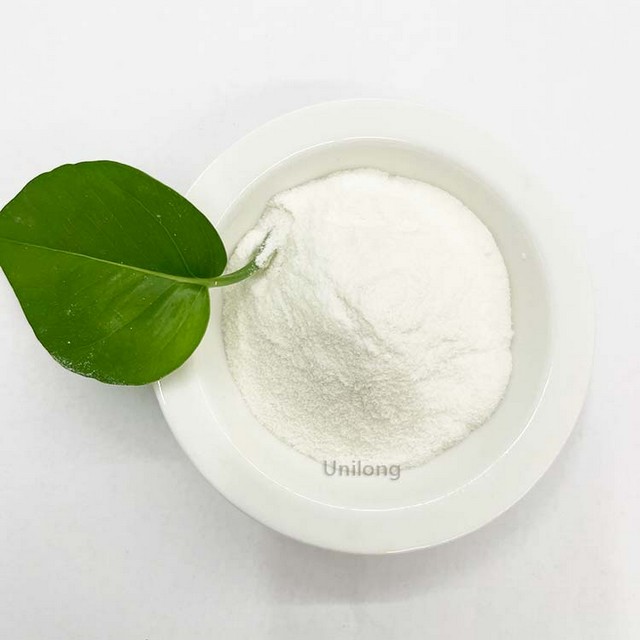
2,3-Dimethyl-2,3-diphenylbutane CAS 1889-67-4
2,3-Dimethyl-2,3-diphenylbutane CAS 1889-67-4 (DMDPB ) is a stable organic compound with the molecular formula C₁₈H₂₂ and a molecular weight of 238.37 g/mol. Also known as Dicumene. It usually appears as a white to light-yellow crystalline solid, insoluble in water but soluble in aromatic hydrocarbons and other organic solvents.
Due to its ability to generate free radicals at elevated temperatures, this compound is widely used in polymerization, flame-retardant systems, and fine chemical synthesis. As a professional 2,3-Dimethyl-2,3-diphenylbutane supplier and manufacturer, we provide high-purity products for industrial production, and customized applications.
Specification
| Item |
Specification |
| Boiling point |
335.97°C (estimate) |
| Density |
0.9859 (estimate) |
| Storage conditions |
Sealed in dry,2-8°C |
| MF |
C18H22 |
| MW |
238.37 |
| Refractivity |
1.5413 (estimate) |
Application
-
Flame Retardant Synergist
Applied in expandable polystyrene (EPS) and other polymer systems, 2,3-Dimethyl-2,3-diphenylbutane works as a synergist to reduce the required amount of halogen flame retardants while maintaining high fire resistance.
-
Polymerization Additive
Thanks to its radical-forming capability at high temperatures, it is used in suspension polymerization, graft copolymerization, and crosslinking reactions to enhance reaction efficiency.
-
Organic Synthesis Intermediate
Serves as an intermediate in fine chemicals and specialty materials synthesis, suitable for both research and industrial-scale production.
-
Polymer Modification
Used in polymer modification processes to improve stability and overall performance of the end products.
Product Feature
1. This non-peroxide carbon-based initiator has outstanding thermal stability, with a decomposition temperature of approximately 230°C. It does not decompose prematurely under normal extrusion processing temperatures. Compared to DCP and other peroxides, it has a wider processing window, is less prone to premature crosslinking, produces no bubbles, and has no decomposition odor. It has strong processing stability.
2. The flame retardancy synergistic effect is strong. Under the same flame retardancy level, the addition amount of the main flame retardant can be reduced by 15% – 30%, improving the LOI, making it easier to pass UL94 V-0, having good smoke suppression effect, being low in toxicity and low in smoke emission.
3. It combines the dual functions of flame retardancy and grafting crosslinking. As a single additive, it simultaneously achieves flame retardant enhancement, polyolefin grafting, and crosslinking modification, reducing the number of formula additives and simplifying the formulation management.
4. It is friendly to the mechanical properties of the substrate. Unlike antimony trioxide and high-added bromine agents, which are prone to impact and tensile strength reduction; after adding dicumene, the material’s impact and tensile retention rates are higher, and the product yield is improved.
5. It does not have an oxygen-containing structure. The polyolefin after grafting modification has better aging resistance and antioxidant properties than the peroxide system, making it suitable for long-term outdoor and weather-resistant products.
6. Morphology stability: Dicumene is a white / pale yellow crystalline powder with good dispersibility. It has good compatibility with PP, PE, EPS, XPS, HIPS, and ABS. It is suitable for granulation, masterbatch, foaming sheet, and extrusion board formulations.
Product Advantages
-
1. Purity: Industrial grade standard ≥ 97% by HPLC, high purity specification ≥ 99%; low moisture and volatile content, ensuring the stability of the masterbatch.
-
2. Decomposition temperature: Begins to decompose at around 230℃. Confirm if the customer’s extrusion temperature matches to avoid formulation conflicts.
-
3. Addition ratio: Generally 0.3–1.2% for flame retardant systems. Adjust according to the bromine agent system and target UL grade; grafting formulations are evaluated separately.
-
4. Compatibility and precipitation: Good compatibility with polyolefin substrates. Low risk of precipitation at normal addition amounts; recommended to conduct migration tests for high addition and low-temperature environments.
-
5. Odor: Low odor, superior to peroxides; the high-purity version has even lower odor, suitable for interior and household materials.
Packing & Storage
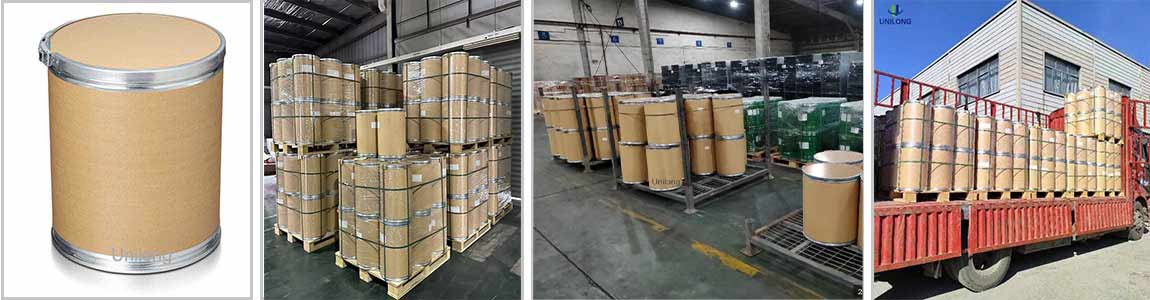
–Standard packaging: 20kg per bag (cowhide paper bag + PE inner liner), or 25kg in a fully paper barrel / fiber barrel, lined with a sealed PE bag, preventing moisture absorption and dust leakage.
– Storage environment: Cool, dry, well-ventilated warehouse. The storage environment should be ≤ 30℃. Keep away from heat sources, open flames and direct sunlight; long-term exposure to sunlight is not recommended.
– Prohibited items: Do not mix with strong acids, strong bases, reducing agents or heavy metal salts; avoid storing in the same warehouse as peroxides.
– Sealing requirements: Unused products must be tightly sealed or wrapped in inner bags to prevent moisture absorption and dust contamination; after getting wet, they are prone to caking and their dispersibility decreases.
– Shelf life: Under normal storage conditions, it can last for 24 months (2 years). After arrival, it is recommended to use them within 6-12 months to ensure stable decomposition activity.
FAQ
Q: How to apply for samples?
A: Samples weighing more than 1kg are charged at the unit price of the regular product. After receiving the sample application, the samples will be dispatched within 1-2 working days. COA and SDS will be attached along with the samples.
Q: What is the minimum order quantity (MOQ)?
A: Regular bulk MOQ: 20kg; Long-term stable orders can be negotiated. Small trial orders, formula development orders can start with an order of 20kg.
Q: How long is the delivery period?
A: For in-stock products: After receiving the deposit, the samples will be dispatched within 3-5 working days;
A: For large orders, high-purity specifications / customized granules, OEM: 7-10 working days; During peak season, communicate the delivery period in advance.
Shipping documents and customs declaration materials will be prepared simultaneously, without occupying the production cycle.
Q: What are the purity specifications available?
A: Industrial regular: ≥97% HPLC; High-purity specifications ≥99% HPLC. Both specifications are in stock. COA indicates purity, melting range, volatility, and ash content.
Q: Can the product still be used if it has become lumpy?
A: Minor lumps are usually caused by moisture and pressure. The chemical activity itself will not be lost. Sieving or heating and mixing can make it usable again. For severe moisture absorption lumps, discoloration and yellowing, it is recommended to conduct a small trial first for evaluation. It is recommended to take measures to prevent moisture in the warehouse.
Q: Compared with DCP, what is the biggest difference in storage and transportation?
A: DCP is an oxidizer, stored at controlled temperature and is prone to explosion when heated; Lianku is a carbon radical initiator, has high thermal stability, and has much more relaxed storage management, with less safety pressure in the workshop and warehouse.
Q: What is the general addition amount? Is there a high risk of precipitation?
A: Flame retardant synergistic formula: 0.3–1.2%; Graft modification formula will be evaluated separately. Normal addition amount has a low risk of precipitation; For low-temperature environments and high addition formulas, it is recommended that customers conduct migration and spray tests themselves.
Q: Can it be made into a masterbatch?
A: Support OEM of Lianku masterbatch (PP carrier / PE carrier), masterbatch products have lower dust, are more friendly for feeding, and the MOQ of masterbatch orders is higher, the delivery period will be confirmed separately.
Q: What is the payment method?
A: T/T; Long-term old customers can negotiate other terms, and PI, contract can be provided.