

In the highly competitive North American and European pulp and paper markets, maximizing yield while minimizing environmental impact is the ultimate goal for mill operators. The key to achieving this delicate balance lies in the efficiency of the alkaline pulping process. We are proud to introduce our premium synthetic Anthraquinone (AQ), a high-performance catalyst specifically engineered to meet the rigorous standards of Western pulping operations.
Ⅰ. Basic Specification
Product Name: Anthraquinone
CAS No.: 84-65-1
Appearance :Pale yellow to light grey powder
Melting point :283.0°C MIN
Purity :98.5%MIN
Ash :0.5% MAX
Moisture :0.5% MAX
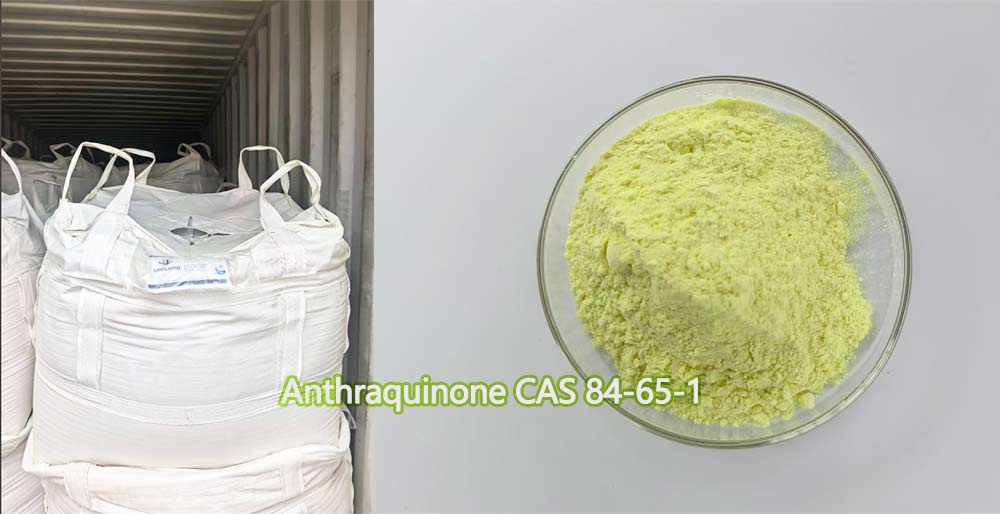
Anthraquinone is a significant quinoid organic compound, typically referring specifically to 9,10-anthraquinone. It exists both as a naturally occurring substance and as a vital synthetic chemical raw material, finding extensive applications in the dye, papermaking, and pharmaceutical industries.
Solubility: Insoluble in water, but soluble in various organic solvents such as ethanol, ether, benzene, and chloroform.
Chemical Properties: It exhibits relatively stable chemical properties and is not easily oxidized; however, it is capable of undergoing reactions such as nitration, sulfonation, and bromination.
Ⅱ. DESCRIPTION
Manufactured through an advanced, tightly controlled synthetic process, our Anthraquinone guarantees a minimum purity of 99%. In the demanding environment of a digester, purity is not just a specification; it is the foundation of performance. Our 99%+ pure AQ acts as an exceptionally efficient redox catalyst. It rapidly scavenges reducing end groups on carbohydrates, effectively preventing their degradation into low-molecular-weight acids. The direct result is a significant increase in pulp yield, often ranging from 1% to 3%, alongside a marked reduction in reject content. Simultaneously, it accelerates the cleavage of beta-ether bonds in lignin, allowing for faster delignification. For mill managers, this translates directly into reduced wood consumption, lower active alkali requirements, and substantial energy savings during the cooking cycle.
Ⅲ. Advanced Production: Merging Tradition with Innovation
Beyond its exceptional purity, our synthetic Anthraquinone is formulated with a slightly alkaline profile, maintaining a pH between 9 and 10. This specific characteristic is a critical advantage for Kraft and Soda pulping processes. The alkaline nature of the product ensures immediate and uniform dispersion within the highly alkaline cooking liquor. It eliminates the risk of localized acidic spots that can severely compromise fiber strength and pulp quality. Furthermore, this seamless compatibility means no additional neutralization steps are required, streamlining your chemical handling process and ensuring consistent, predictable results across every batch.
We also understand that in today’s global market, supply chain resilience is just as vital as chemical performance. Many mills have experienced disruptions due to inconsistent sourcing. Our robust manufacturing infrastructure guarantees a highly stable and continuous supply of synthetic Anthraquinone, shielding your operations from market volatility and ensuring your production schedules remain uninterrupted.
Finally, we recognize that modern mills have diverse handling, storage, and automated dosing requirements. To support your unique operational needs, we offer comprehensive packaging customization. Whether your facility requires standard 25kg fiber drums for manual handling, specialized moisture-resistant packaging for long-term storage, or customized bulk solutions designed for automated feed systems, we can tailor our packaging to integrate perfectly into your workflow..
Ⅳ. Application
AQ functions through a dual catalytic mechanism. First, it oxidizes the reducing end groups of carbohydrates into stable aldonic acid end groups. This effectively inhibits the “peeling reaction,” preventing the alkaline degradation of cellulose and hemicellulose. Second, the reduced form of AQ (anthrahydroquinone) reacts with lignin, accelerating the cleavage of lignin macromolecules and facilitating their dissolution. Throughout this cycle, AQ is continuously regenerated.
Synthetic Anthraquinone (AQ) is a highly efficient redox catalyst used as a cooking additive in alkaline pulping processes, such as Kraft and Soda methods. Operating in extremely small doses (typically 0.02%–0.05% of dry wood weight), it significantly enhances both the economic and environmental performance of paper mills.
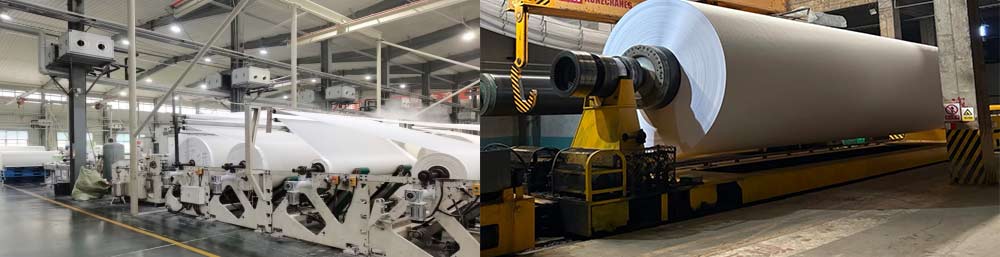
Increased Pulp Yield: By protecting carbohydrates, AQ typically boosts pulp yield by 1% to 3%, producing more paper from the same amount of wood.
Energy & Time Savings: It accelerates delignification, allowing mills to either shorten cooking time by 10%–20% or reduce cooking temperatures by about 5°C, significantly cutting steam and energy consumption.
Chemical Efficiency: Mills can reduce active alkali consumption by approximately 10%, lowering production costs and easing the burden on the chemical recovery system.
Enhanced Quality: AQ promotes uniform wood chip softening, reduces unpulped shives, and improves the bleachability of the pulp, reducing downstream bleaching chemical usage.
Ⅴ. Summary
By choosing our premium synthetic Anthraquinone, you are investing in a strategic advantage for your pulping operations. Experience higher yields, lower operational costs, and a more sustainable production footprint. Contact us today to request a sample or discuss how our customized solutions can optimize your mill’s performance.
