

Sodium 4-vinylbenzenesulfonate is a highly functional monomer used in advanced polymer chemistry and specialty material development. Also known as Sodium p-styrenesulfonate and chemically referenced as CAS 2695-37-6 (or 2695-37-6), this ionic monomer introduces strong sulfonate groups into polymer backbones, enabling high performance in water-soluble polymers, ion exchange resins, conductive materials, and specialty coatings.
In industrial applications, Sodium 4-vinylbenzenesulfonate plays a critical role in producing polymers with excellent ionic conductivity, hydrophilicity, and chemical resistance—qualities that support innovation in electronic materials, membranes, and specialty emulsions.
I. Chemical Profile of Sodium 4-Vinylbenzenesulfonate
| Item | Description |
| Chemical name | Sodium 4-vinylbenzenesulfonate |
| Synonyms | Sodium p-styrenesulfonate, SVBS |
| CAS | CAS 2695-37-6 |
| Chemical formula | C8H7NaO3S |
| Appearance | White to off-white crystalline powder |
| Solubility | Highly soluble in water |
| Functional group | Sulfonate group and reactive vinyl group |
The presence of a polymerizable vinyl group and a sulfonate functional group allows it to combine the reactivity of styrenic monomers with strong ionic properties.
II. Key Benefits of Sodium 4-Vinylbenzenesulfonate
- Enables ionic and proton-conductive polymer structures
- Enhances hydrophilicity and surface charge density
- Compatible with free-radical polymerization (e.g., with styrene or acrylates)
- Improves dispersibility and coating wettability
- Provides thermal and chemical stability
These features make Sodium p-styrenesulfonate essential in specialty polymer modification.
III. Major Applications of Sodium 4-Vinylbenzenesulfonate in Polymer Chemistry
1. Ion-Exchange and Proton-Conductive Polymers
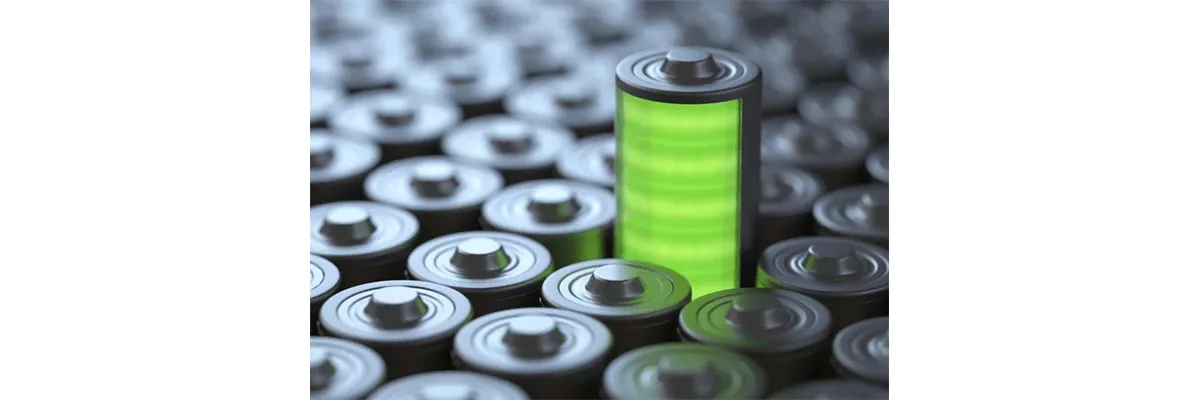
Sodium 4-vinylbenzenesulfonate plays a foundational role in producing ion-exchange membranes and proton-conductive polymers used in energy and separation technologies. When copolymerized with styrene or other functional monomers, it introduces stable sulfonate groups that enable rapid ionic and proton transfer.
This makes it an essential building block for fuel cell proton-exchange membranes (PEM), battery electrolytes, electro-dialysis membranes, and electrodialysis desalination systems. Compared with post-sulfonated polymers, materials derived from Sodium 4-vinylbenzenesulfonate offer higher structural stability, consistent sulfonation levels, and better mechanical integrity, providing reliable performance in harsh chemical and thermal environments.
2. Water-Soluble and Functional Polymers
In water-soluble polymer production, Sodium 4-vinylbenzenesulfonate (CAS 2695-37-6) is widely used to create charged, hydrophilic polymer networks. When copolymerized with acrylamide, acrylic acid, or maleic anhydride, it improves dissolution rate, dispersibility, ionic charge density, and flocculation efficiency.
These polymers are used in water-treatment chemicals, pigment dispersants, detergent additives, rheology modifiers, and soil conditioners. In wastewater treatment, the sulfonate groups enhance particle bridging and sludge settling behavior. In coatings and ink systems, they improve wetting, dispersion, and long-term storage stability, making the material highly valued in industrial and environmental process industries.
3. Conductive and Antistatic Materials
Sodium p-styrenesulfonate enables the preparation of conductive and anti-static polymer materials for electronic and advanced packaging applications. When combined with conductive fillers, polyaniline, or other doped polymer matrices, it enhances ionic conductivity, electrochemical stability, and charge dissipation properties.
As a result, it is widely used in anti-static films, conductive coatings, semiconductor packaging, display components, ESD-safe plastics, and battery separator coatings. Unlike surface-treated anti-static additives that lose performance over time, polymers prepared using Sodium 4-vinylbenzenesulfonate maintain permanent ionic conductivity, ensuring long-lasting ESD control in high-value electronic environments.

4. Polymerizable Surfactant for Emulsion & Latex Systems
In emulsion polymerization, Sodium 4-vinylbenzenesulfonate acts as a reactive surfactant (surfmomer), providing both emulsification capability and chemical grafting into the polymer backbone. Unlike conventional surfactants that can migrate or cause film defects, this reactive structure eliminates surfactant leaching, improving latex particle stability, gloss, water resistance, adhesion strength, and aging resistance.
It is particularly beneficial for acrylic emulsions, styrene-acrylic emulsions, waterborne coatings, paper sizing agents, adhesive emulsions, and textile finishes. This makes it ideal for high-performance waterborne polymer systems where long-term stability and film purity are critical.
5. Specialty Coatings, Adhesives, and Surface-Modification Polymers
In advanced surface-modification applications, Sodium 4-vinylbenzenesulfonate (Sodium p-styrenesulfonate) is used to build co-polymers that deliver superior wettability, ion-responsiveness, and anti-fouling behavior. These properties benefit optical coatings, membrane surface treatments, anti-fog coatings, hydrophilic adhesives, biomedical surface layers, and microfluidics materials.
Its sulfonate group enhances water interaction, while the vinyl structure enables polymer network compatibility, allowing engineers to tailor coating functionality for biocompatibility, moisture control, or surface charge enhancement. As industries move toward smart materials and functional surfaces, demand for this monomer continues to grow.
IV. Why Polymer Chemists Choose Sodium 4-Vinylbenzenesulfonate
Polymer researchers select CAS 2695-37-6 because it allows controlled introduction of sulfonate groups into polymer structures, enabling:
- Custom ionic properties
- Tailored hydrophilicity
- Improved polymer-electrolyte interactions
- Stable polymer backbone vs. post-sulfonation routes
It is preferred over sulfonated styrene because it offers direct polymerization capability without additional chemical processing.
V. Conclusion
Sodium 4-vinylbenzenesulfonate (CAS 2695-37-6) is a versatile ionic monomer essential in modern polymer science. Whether for ion-exchange membranes, conductive materials, water-soluble polymers, or advanced coatings, it provides unmatched adaptability and performance advantages, making it a preferred choice for high-value polymer research and manufacturing.
