
Sodium tin oxide (SODIUM STANNATE TRIHYDRATE) is the main salt for alkaline tin plating. It forms a complex salt with sodium hydroxide, which dissolves in the tin plating solution.
Ⅰ. What is SODIUM STANNATE TRIHYDRATE CAS 12209-98-2 ?
When the solution is electrolyzed, the tin is contained in the anionic complex ions, directly reducing the alkaline tin plating solution at the anode. The typical dosage is 75–90 kg/L. It can also be used as an auxiliary main salt for cyanide plating of copper-tin alloys and pyrophosphate, stannate, and copper-tin alloys. In the dyeing and printing industry, it is used as a mordant, to precipitate pigments, and in ceramics and glass.

II. Applications of Sodium Stannate
1. Electroplating Industry:
Sodium Stannate is one of its most important applications. It is the main salt in alkaline tin plating processes, providing tin ions to the plating solution. It is also used as an auxiliary main salt for plating copper-tin alloys, zinc-tin alloys, and other alloy coatings.
Sodium Stannate as the main salt in the electrolyte, it provides tin ions, which are reduced at the cathode to form a plating layer. It produces a dense, bright, and strongly adherent plating layer with low corrosiveness to equipment. Its dosage in the plating solution is typically 75–90 kg/L, and it is a key factor determining the quality of tin plating.
Used for electroplating copper-tin alloys, zinc-tin alloys, tin alloys, etc. Through synergistic action with complexing agents, it can stabilize tin ion concentration and optimize coating performance, such as reducing plating bath aging.
Tin forms complex salts with sodium hydroxide (such as Na₂[Sn(OH)₆]), which dissolve in tin plating solutions. When an electric current is applied, tin, contained within the anionic complex, is directly reduced at the anode; this is the basis of its electrochemical action.
2. Dyeing and Printing Industry:
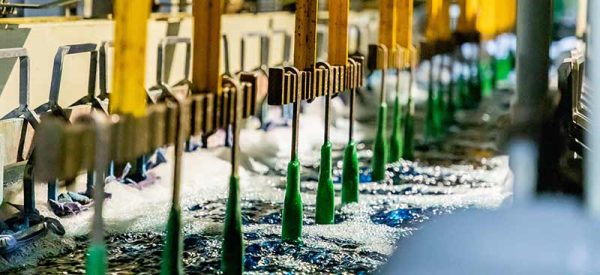
In textile dyeing and printing, i can be used as a mordant to help dyes adhere better to fibers; it can also be used as a flame retardant and weight-increasing agent for textiles.
3. Enhances dye coloring and improves colorfastness
Forms a thin film on the fiber, better adsorbing and fixing dye molecules, resulting in brighter and more durable colors.
4. Improves the flame retardant properties of textiles:
Treated fabrics can slow down the burning rate or self-extinguish when exposed to fire, increasing safety.
Increases the weight and thickness of textiles: Its tin component can adhere to the inside of the fiber, improving the fabric’s feel and drape, enhancing the product’s quality.

Ⅲ. Market Prospects of Sodium Stannate
Glass and Ceramics Industry: Used in the manufacture of specialty glasses and ceramics, for example, as a clarifying agent or to increase the strength of products.
Other Emerging Applications: In analytical chemistry, it can be used for the detection of certain metal ions. In materials science, it is also used as a precursor for the synthesis of advanced materials such as tin oxide nanoparticles, which have potential applications in electronics, catalysis, and energy storage.
Ⅳ. Sodium Stannate Trihydrate Market Outlook
1.Stable market operation, technological innovation expanding boundaries: Sodium stannate opens a new chapter in applications in 2026.
2.Emerging Applications: Technological innovation continues to expand the application boundaries of sodium stannate. For example, in the new energy field, it is being researched for use as an advanced material in perovskite solar cells and lithium-ion batteries; in the agricultural field, its application as an environmentally friendly biological control agent is also showing potential.
3.From an industry perspective, the Asia-Pacific region, particularly China, remains the fastest-growing consumer of tin chemicals globally, thanks to its massive manufacturing base. With the steady recovery of the electronics, automotive, and construction industries, demand for PVC stabilizers and electroplating materials continues to rise.
4.Technological Breakthrough: High-Solubility Products Lead Process Innovation
5.Notably, the technological upgrade of sodium stannate is becoming a new highlight in the industry. Traditional sodium stannate easily precipitates in alkaline solutions, requiring additional heating or stirring. However, recently launched high-solubility sodium stannate products from domestic companies have achieved efficient dissolution at room temperature by adjusting the crystal morphology and particle size distribution.
6.This improvement not only significantly shortens the preparation time of electroplating solutions and reduces energy consumption but also avoids uneven composition of the plating solution due to insufficient dissolution, thereby improving the density and gloss of the coating. Industry experts indicate that by reducing the content of free alkali and heavy metal impurities such as iron and lead, the new generation of sodium stannate products demonstrates better compatibility and stability in complex processes such as copper-tin alloy plating.
Ⅴ. Advantages of using Unilong sodium stannate
1.The content of harmful impurities ((Fe), (Pb), (As)) is far lower than the national standard, which avoids darkening, fogging, and streaking during the electroplating process, and reduces the corrosion resistance and weldability of the coating.
2. The content of Free alkali can be less than 0.5% (national standard ≤3.5), which is conducive to the stability of sodium stannate solution and avoids strong corrosiveness during use.
3. The raw material tin of our company is sourced from tin mines in Yunnan and Jiangxi provinces, which has a higher purity, greater hardness and better application effect of the products.
4.Compared with the products of other factories, our products have more stable performance and are less prone to caking.

5. Compared with the Sodium stannate trihydrate products from other domestic factories in China and those from abroad, our products have a stronger luster. This makes the products smoother, whiter and more lustrous for the ceramic manufacturing industry.
Conclusion
SODIUM STANNATE TRIHYDRATE is the main salt in alkaline tin plating. It forms a complex salt with sodium hydroxide, which dissolves in the tin plating solution. When the solution is electrified, the tin, contained in the anionic complex, directly reduces the alkaline tin plating solution at the anode.Unilong as a reliable supplier ensures consistent quality, technical support, and optimized production outcomes.
