 PT
PT  EN
EN  ZH
ZH  DE
DE  ES
ES  KO
KO  FR
FR  TH
TH  AR
AR  IT
IT  VI
VI  NL
NL  RU
RU 

As an organic chemical intermediate with a century-long application history, anthraquinone (CAS number 84-65-1, chemical formula C₁₄H₈O₂) is breaking through and expanding its application scenarios through green production technologies, and is rejuvenating its industrial vitality under the guidance of the “dual carbon” goals. Recently, with the industrialization of the new generation of anthraquinone carrier technology and the deepening of industry restructuring, this traditional chemical product has gradually shed its high-energy consumption label and is transforming towards high-end and green development.
What is Anthraquinone 84-65-1?
Appearance and Properties: Anthraquinone is usually a yellow crystal or powder. Its color can range from yellow-green to beige to brownish.
Melting and Boiling Points: The melting point is 286℃, and the boiling point is 379.8℃. It has a relatively high melting and boiling point.
Densidade: The density is approximately 1.44g/cm³ (at 20℃), which is greater than that of water.
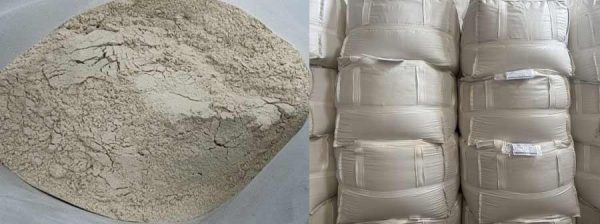
Solubilidade: Anthraquinone is insoluble in water, difficult to dissolve in cold benzene, slightly soluble in ethanol, ether, and chloroform, and easily soluble in hot benzene and hot toluene. Anthraquinone can also dissolve in concentrated sulfuric acid.
Sublimation: Anthraquinone can sublime and slightly decomposes at about 450℃.
Propriedades Químicas:
Estabilidade: Anthraquinone has good thermal stability, is not easily oxidized, and is not easily substituted by electrophilic groups. Anthraquinone is incompatible with strong oxidants.
Reactivity: Anthraquinone is easily brominated, sulfonated, and nitroded. Anthraquinone can be sulfonated by fuming sulfuric acid; anthraquinone has a special reducing property and can react with various reducing agents.
Arenes are insoluble in water but soluble in organic solvents. They have stable chemical properties and are the core raw materials in fields such as dyes, papermaking, and hydrogen peroxide production. According to data, in 2025, the production capacity of the anthraquinone industry in China will reach 280,000 tons. Among them, the consumption in the dye sector exceeds 55%, and the consumption in the paper industry accounts for approximately 58.3%. At the same time, the demand in emerging fields such as pesticides, medicine, and new energy battery materials is rapidly increasing. As a key intermediate for anthraquinone-based dyes, it can be synthesized into over 400 types of dye products through processes such as sulfonation and chlorination. With excellent light resistance, it supports the upgrading of the textile industry to a higher level. In the paper industry, as a bleaching aid, it can shorten the production cycle, increase the pulp yield, reduce environmental loads, and become an important supporting raw material under the “replacing plastic with paper” policy.
The adjustments and innovations faced by Anthraquinone 84-65-1
For a long time, the anthraquinone industry has been constrained by traditional production processes and is confronted with environmental pressure and structural contradictions. At the same time, the waste alkali liquid and solid waste generated by the traditional process pose challenges to the environment. In the field of hydrogen peroxide production, the traditional ethyl and butyl anthraquinone carriers have poor stability and are prone to degradation, requiring reliance on alkaline regeneration treatment. This not only poses safety risks but also limits production efficiency.
Through technological innovation, the industry’s pain points are being addressed. The new generation of anthracene carrier technology, through the optimization design of molecular structure, significantly improves the stability and solubility of the carrier. In the pilot tests, there was no obvious degradation phenomenon. Anthraquinone can completely eliminate the alkali regeneration process, eliminating safety risks and environmental pressure at the source. At the same time, it is expected to double the production capacity of the hydrogen peroxide plant. This technology has overcome four major challenges such as efficient catalytic alkylation and active oxygen catalytic oxidation, and developed five core technologies, providing a new path for the green application of anthracene. Meanwhile, Unilong adopts the continuous catalytic oxidation method, reducing the unit energy consumption to below 1.28 tons of standard coal, and controlling the carbon emission intensity at 1.85 tons of CO₂ per ton, meeting the strict environmental protection standards ahead of schedule.
The core application fields of anthraquinone (CAS 84-65-1)
As a core chemical raw material, its applications are concentrated in three major fields and the demand is continuously increasing:
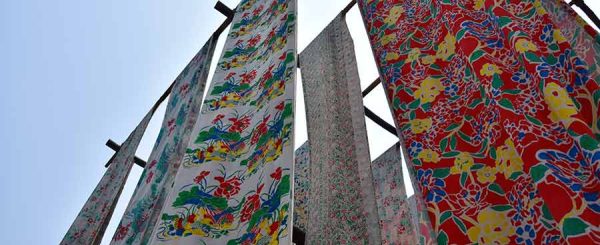
Dye industry (core application): As a key intermediate for anthraquinone-based dyes, through processes such as sulfonation, chlorination, and nitration, it can be combined to produce over 400 products including disperse dyes, acid dyes, reducing dyes, and reactive dyes, with a complete color spectrum and excellent light resistance, and is widely used in the textile and printing industries.
Paper industry (rapidly growing field): As a bleaching agent in the alkaline cooking process, a small amount of addition can accelerate the rate of lignin removal, shorten the cooking time, increase the pulp yield, and reduce the load of waste liquid treatment. Currently, it has been widely adopted by most paper mills.
Other fields: Used for the production of high-concentration hydrogen peroxide; in the fertilizer industry, to manufacture sulfonated anthraquinone disulfonic acid sodium; in the dyeing industry, as a desizing aid, and also an important intermediate in organic synthesis, medicine, and pesticide fields.
With the continuous advancement of technological innovation and industrial upgrading, this traditional chemical intermediate is gradually transforming from a “basic raw material” to a “high-end material”, injecting new impetus into the development of green chemical industry.
We are a professional anthraquinone manufacturer with advanced production technology and strict quality control systems, providing stable supply and reliable product performance for global customers. Our anthraquinone features excellent thermal stability, good reactivity and high purity, which is widely used in dye synthesis, hydrogen peroxide production and pulp processing industries. We offer competitive anthraquinone price with flexible customization services to meet different purchase needs of bulk and small-batch orders. Whether you want to inquire about detailed specifications or place an anthraquinone buy order, please contact us at any time—we will provide you with one-stop procurement solutions and thoughtful after-sales service.
